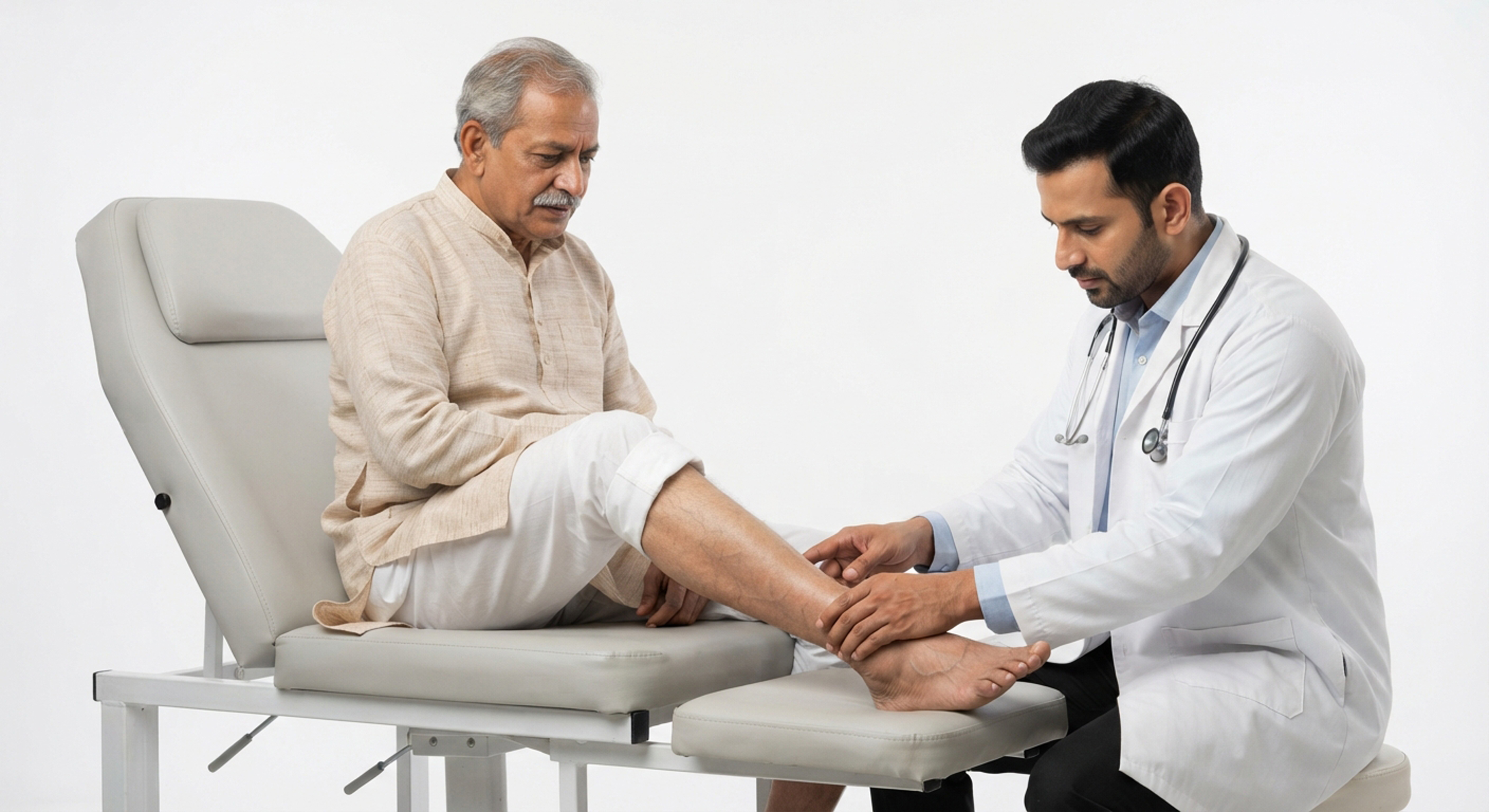
Orthopedic Care in Padi for Bone, Joint, Spine & Injury-Related Problems
Pain or difficulty involving the bones, joints, spine or movement can interfere with walking, working, exercising and everyday activities. Finding the right orthopedic care starts with understanding what is causing the problem, how serious it may be and which treatment approach is appropriate for the individual patient.
V Heal Multispeciality Hospital provides orthopedic care in Padi for patients seeking evaluation and treatment for orthopedic concerns, with services supported by physiotherapy and general physician care. The hospital's orthopedic team includes Dr. S. R. Ananth Brasanna, specialized in fracture, spine and joint replacement care with expertise in Stem Cell/GFC joint injections, and Dr. Tharan Kumar, specializing in trauma and joint replacement.
Whether the concern follows an injury or has developed gradually, an orthopedic consultation can help determine the next appropriate step rather than relying on self-diagnosis or assuming that surgery is necessary.
What Does Orthopedic Care Include?
Orthopedic care in Padi includes the evaluation and management of conditions affecting the bones, joints, spine and other parts of the musculoskeletal system. Depending on the diagnosis, care may involve clinical assessment, diagnostic investigations, non-surgical treatment, physiotherapy, injection-based treatment or surgical evaluation. The appropriate option depends on the patient's condition and individual clinical factors.
What Is Orthopedic Care?
Orthopedic care is the medical evaluation and treatment of problems involving the musculoskeletal system. This includes the structures that allow the body to move and provide support, such as bones, joints, muscles, ligaments, tendons and the spine.
Orthopedic problems can have very different causes. A sudden injury may result in a fracture or trauma-related problem, while persistent joint pain may develop gradually because of changes within a joint or surrounding tissues. Spine-related symptoms can also have several possible causes.
For this reason, orthopedic care is not simply about treating pain. The first step is usually to understand why the symptom is occurring and how it is affecting function.
Depending on the condition, an orthopedic doctor may assess:
Pain and its location
Swelling or tenderness
Joint movement
Muscle strength
Stability of a joint
Ability to walk or bear weight
Previous injuries
Changes in physical function
Previous treatment and response
Relevant medical history
The findings from this assessment help guide decisions about further investigation and treatment.
What Orthopedic Problems Can Be Evaluated?
An orthopedic consultation may be appropriate for a wide range of conditions affecting bones, joints, the spine and movement.
Fractures and Bone Injuries
A fracture occurs when a bone develops a break or crack. Fractures can differ considerably in their location, pattern and severity.
An orthopedic evaluation helps determine the nature of the injury and whether the affected area requires immobilization, further monitoring, rehabilitation or surgical consideration.
After a significant injury, particularly when there is severe pain, swelling, deformity or difficulty using the affected limb, prompt medical assessment is important.
Joint Pain and Joint Problems
Joint pain can affect the knees, hips, shoulders, ankles, elbows, wrists and other joints.
Persistent discomfort may be associated with injury, degeneration, inflammation or other musculoskeletal problems. An orthopedic doctor can assess the symptoms alongside physical findings and, when appropriate, diagnostic imaging.
The goal is to identify the underlying problem rather than treating every type of joint pain in the same way.
Spine-Related Problems
The spine plays an important role in movement, stability and protection of the nervous system. Pain or restricted movement involving the back or neck may have different causes.
An orthopedic assessment can help determine whether the symptoms appear related to a musculoskeletal or spinal problem and whether further investigation or specialist treatment is required.
Trauma and Orthopedic Injuries
Accidents, falls, sports injuries and other forms of trauma can affect bones, joints and surrounding tissues.
Trauma-related orthopedic care focuses on assessing the extent of the injury and determining what needs to happen next. Some injuries can be managed conservatively, while others may require surgical evaluation.
Joint Conditions That May Require Replacement
Advanced damage to a joint can sometimes cause persistent pain and difficulty with everyday movement. In selected patients, joint replacement may become a treatment consideration.
However, joint replacement should not be viewed as the automatic answer to joint pain. The decision depends on factors such as the condition of the joint, symptoms, functional limitations, previous treatment and the patient's overall clinical situation.
When Should You See an Orthopedic Doctor?
You may benefit from an orthopedic consultation when a bone, joint, spine or movement-related problem is persistent, worsening or interfering with normal activities.
Common reasons to seek evaluation include:
Persistent bone or joint pain
Pain following an injury
Difficulty walking or bearing weight
Reduced range of movement
Recurrent joint swelling or stiffness
Persistent back or neck symptoms
Suspected fracture
Joint instability
Difficulty performing normal activities because of pain
Symptoms that continue despite previous treatment
Trauma involving a bone or joint
Not every episode of pain requires an orthopedic consultation. However, symptoms that persist, significantly limit function or follow a substantial injury deserve appropriate medical evaluation.
What Happens During an Orthopedic Consultation?
An orthopedic consultation is generally designed to establish a clearer picture of the patient's symptoms, identify possible causes and determine whether further investigation or treatment is needed.
Understanding Your Symptoms
The doctor may ask questions such as:
Where exactly do you feel the pain?
When did it begin?
Did it start after an injury?
Is it getting better, worse or staying the same?
Which activities make it worse?
Does it interfere with walking, sleeping or daily activities?
Have you received treatment before?
Did previous treatment provide relief?
These details can help distinguish between different types of orthopedic problems.
Physical Examination
The examination depends on the area and type of complaint.
The doctor may assess:
Joint movement
Tenderness
Swelling
Muscle strength
Stability
Alignment
Functional movement
Ability to bear weight
The purpose is not simply to locate pain but to understand how the affected area is functioning.
Diagnostic Evaluation When Required
Some orthopedic problems can be assessed largely through the history and physical examination, while others may require imaging or additional investigations.
Depending on the suspected condition, a doctor may consider tests such as X-rays or other imaging.
The appropriate investigation depends on the clinical question. More testing does not automatically mean better care; the useful test is the one that helps clarify the patient's specific problem.
Discussing the Treatment Pathway
Once the condition has been assessed, the orthopedic doctor can explain the available options.
These may include:
Non-surgical management
Activity modification
Physiotherapy
Medication where clinically appropriate
Injection-based treatment for selected conditions
Surgical evaluation
The treatment pathway should be based on the diagnosis and the patient's individual circumstances.
How Is the Right Orthopedic Treatment Decided?
There is rarely one treatment that is appropriate for every patient with the same symptom.
An orthopedic doctor may consider several factors before recommending a treatment approach:
Factor
Why It Matters
Diagnosis
Different conditions require different approaches
Severity
More significant structural problems may need additional intervention
Duration
Persistent symptoms may require further evaluation
Functional impact
Difficulty walking or performing daily activities can influence treatment decisions
Previous treatment
Response to earlier treatment provides useful clinical information
Age and overall health
These can affect treatment suitability
Injury history
Trauma can change the nature and urgency of treatment
Patient circumstances
Work, activity and rehabilitation requirements may be relevant
This is why an online description of symptoms cannot replace an orthopedic assessment.
What Is the Difference Between Orthopedic Care and Physiotherapy?
Orthopedic care focuses on evaluating and medically managing musculoskeletal conditions, while physiotherapy focuses on movement, physical function and rehabilitation.
The two can complement each other.
For example, a patient may first require orthopedic assessment after an injury. Once the condition has been evaluated and an appropriate treatment plan established, physiotherapy may form part of rehabilitation when clinically indicated.
At V Heal Multispeciality Hospital, orthopedic services and physiotherapy services are available, allowing rehabilitation to be considered as part of the patient's overall care pathway when appropriate.
What Should You Bring to an Orthopedic Consultation?
Patients can make their consultation more useful by bringing relevant information about their health and previous treatment.
These may include:
Previous X-rays or scan reports
Medical records related to the current problem
Details of previous orthopedic treatment
Information about previous injuries or surgeries
A list of current medications
Relevant laboratory reports, if applicable
A brief timeline of when symptoms started
It can also help to note what makes the symptoms better or worse and which daily activities have become difficult.
This gives the doctor a clearer picture of how the problem affects your everyday function.
When Is an Orthopedic Assessment Particularly Important After an Injury?
An orthopedic assessment can be particularly important when an injury causes symptoms that suggest more than a minor soft-tissue problem.
Seek prompt medical attention when an injury is associated with:
Significant or worsening pain
Visible deformity
Marked swelling
Inability to use the affected limb normally
Difficulty bearing weight
Restricted movement
Suspected fracture
Significant trauma
The appropriate urgency depends on the nature of the injury. Severe trauma or concerning symptoms may require immediate medical attention rather than waiting for a routine consultation.
What Are the Treatment Options for Orthopedic Problems?
Orthopedic treatment depends on the underlying diagnosis, severity of the condition, functional limitations and the patient's overall health. There is no single treatment approach that is suitable for every orthopedic problem.
Depending on the condition, an orthopedic doctor may consider:
Non-surgical management
Activity modification
Medication when clinically appropriate
Physiotherapy and rehabilitation
Injection-based treatment for selected conditions
Immobilization or supportive measures for certain injuries
Surgical treatment
Joint replacement procedures for appropriate patients
The important distinction is between treating a symptom and treating its underlying cause. Persistent pain should therefore be evaluated before deciding which treatment is appropriate.
Can Orthopedic Problems Be Treated Without Surgery?
Yes, some orthopedic conditions can be managed without surgery, depending on the diagnosis and severity. Non-surgical care may include physiotherapy, activity modification, medication or other conservative approaches.
However, conservative treatment is not appropriate for every condition. Certain fractures, severe traumatic injuries or advanced joint problems may require surgical assessment.
A doctor may consider:
The nature of the condition
Structural damage
Severity of symptoms
Effect on movement and daily activities
Previous treatment
Response to conservative care
Overall health and treatment suitability
The decision should therefore be made after an appropriate clinical evaluation.
Fracture Care and Orthopedic Injury Management
A fracture is more than simply a painful bone injury. The location and characteristics of the fracture can influence how it should be managed.
An orthopedic evaluation can help determine the nature of the injury and whether the patient requires immobilization, further monitoring, rehabilitation or surgical treatment.
How Are Fractures Evaluated?
After a suspected fracture, the doctor may consider:
A doctor may consider:
How the injury occurred
Where the pain and swelling are located
Whether the affected area can be moved or used
Whether there is visible deformity
Whether there may be associated soft-tissue or joint involvement
Imaging findings when required
X-rays are commonly used to evaluate many fractures, while additional imaging may sometimes be considered depending on the injury.
The treatment decision depends on the specific fracture rather than simply on the presence of a broken bone.
When May a Fracture Need Surgical Treatment?
Not every fracture requires an operation.
Some fractures can be managed through appropriate immobilization and follow-up, while others may require surgical fixation or another intervention.
Surgical evaluation may become relevant when factors such as:
The position or alignment of the fracture
Instability
The type and location of the fracture
Joint involvement
The extent of the injury
Associated damage
make non-surgical management unsuitable.
The orthopedic specialist can explain why a particular approach is being considered and what alternatives may exist.
What Should You Do After a Suspected Fracture?
If you suspect a fracture after an injury, avoid repeatedly moving or testing the injured area.
Instead:
Seek appropriate medical evaluation
Avoid putting unnecessary weight on the injured limb
Keep the affected area supported if possible
Do not attempt to straighten an obviously deformed limb yourself
Bring any available information about how the injury occurred
If there is severe trauma, significant deformity, loss of sensation, major bleeding or another emergency symptom, urgent medical attention is appropriate.
What Does Orthopedic Care Include?
Trauma can affect more than the point where the patient feels pain. An accident or fall may involve bones, joints, ligaments or other surrounding structures.
Orthopedic trauma care focuses on identifying the extent of an injury and deciding what treatment is required.
What Happens During an Orthopedic Trauma Assessment?
The doctor may consider:
Mechanism of injury
Location of pain
Swelling
Bruising
Range of movement
Ability to bear weight or use the affected limb
Joint stability
Possible fracture
Previous injuries in the same area
Imaging may be recommended when it can help clarify the injury.
Why Is Early Assessment Useful After Significant Trauma?
An injury may not always appear severe from the outside. Some fractures or joint injuries can initially resemble a soft-tissue problem.
Appropriate assessment helps determine whether the patient requires:
Observation
Support or immobilization
Rehabilitation
Additional diagnostic evaluation
Surgical consultation
This is particularly relevant for injuries involving major joints or weight-bearing areas.
Joint Pain and Joint Conditions
Joint pain can have many possible causes. A patient may experience pain during movement, stiffness after periods of inactivity, swelling or reduced function.
Rather than treating all joint pain in the same way, orthopedic care begins by identifying the likely cause.
Why Does Persistent Joint Pain Need Evaluation?
Occasional discomfort after unusual physical activity may settle with appropriate rest. Persistent or recurring pain is different.
An orthopedic consultation may be useful when joint symptoms:
Continue for an extended period
Keep returning
Affect walking or movement
Interfere with work or everyday activities
Are associated with swelling or stiffness
Follow an injury
Become progressively more limiting
The assessment can help determine whether the symptoms are related to an injury, joint degeneration or another musculoskeletal condition.
What Factors Influence Treatment for Joint Pain?
The treatment approach may depend on:
The affected joint
Underlying diagnosis
Severity of structural changes
Duration of symptoms
Degree of functional limitation
Previous treatment
Response to conservative care
Patient's general health
Individual treatment goals
For some patients, non-surgical management may be appropriate. Others may eventually require a discussion about injections or surgery.
What Does Orthopedic Care Include?
Joint replacement may be considered when significant joint damage causes persistent symptoms and functional limitations, particularly when other appropriate treatment approaches have not provided adequate relief.
Joint replacement is not determined solely by the amount of pain reported. An orthopedic specialist may consider the overall clinical picture, including examination findings, imaging where appropriate and the impact of the joint problem on daily activities.
What May Lead to a Joint Replacement Discussion?
A specialist may discuss joint replacement when a patient has:
Clinical findings consistent with advanced joint disease
The suitability of surgery must be assessed individually.
What Does Orthopedic Care Include?
Stem Cell and GFC joint injections are injection-based approaches that may be considered for selected patients depending on the joint condition and clinical assessment.
V Heal Multispeciality Hospital has provided information that Dr. S. R. Ananth Brasanna has expertise in Stem Cell/GFC joint injections.
However, these treatments should not be presented as suitable for every patient or as a guaranteed solution for joint problems. The potential role of any injection depends on factors such as the diagnosis, affected joint, symptoms and available clinical evidence.
What Does Orthopedic Care Include?
No. An injection-based treatment should be considered only after assessing whether it is appropriate for the specific patient and condition.
Patients considering these options should ask the orthopedic specialist:
What is the diagnosis?
Why is this treatment being considered?
What evidence supports its use for my condition?
Are there alternative treatments?
What are the potential limitations?
What should I realistically expect after treatment?
Will physiotherapy or another form of rehabilitation also be required?
This discussion allows patients to make an informed decision rather than assuming that an advanced-sounding treatment is automatically the most appropriate one.
What Can Patients Expect During Orthopedic Recovery?
Recovery varies substantially between conditions and individuals.
A patient's recovery may depend on:
Type of orthopedic condition
Severity of injury or joint damage
Treatment received
Age and general health
Physical activity
Adherence to rehabilitation
Presence of other medical conditions
Follow-up requirements
Patients should avoid comparing their recovery timeline directly with another person's experience.
A gradual improvement in movement and function may be expected in many rehabilitation pathways, but the appropriate pace should be determined according to the patient's specific condition and treatment.
What Are the Risks and Limitations of Orthopedic Treatment?
Every treatment approach has potential limitations.
Depending on the condition and intervention, considerations may include:
Treatment may not eliminate symptoms completely
Recovery can take time
Some conditions may require more than one treatment approach
Surgery carries procedure-specific risks
Rehabilitation may be necessary
Injection-based treatments may not be suitable for every patient
Individual outcomes can vary
A responsible treatment discussion should include not only potential benefits but also limitations, alternatives and relevant risks.
Patients should ask their orthopedic doctor to explain these factors before making a treatment decision.
Orthopedic Expertise at V Heal Multispeciality Hospital
The orthopedic information supplied for V Heal Multispeciality Hospital includes expertise across fracture care, spine-related orthopedic care, trauma, joint replacement and Stem Cell/GFC joint injections.
Dr. S. R. Ananth Brasanna
Areas supplied:
Fracture
Spine
Affect walking or movement
Joint replacement
Stem Cell/GFC joint injection expertise
Dr. Tharan Kumar
Areas supplied:
Trauma
Joint replacement
The hospital also provides physiotherapy and general physician services, supporting a broader healthcare pathway when those services are clinically relevant.
How Can You Prepare for an Orthopedic Consultation?
A little preparation can make it easier to explain your symptoms accurately.
Before visiting an orthopedic doctor, consider noting:
When the Problem Started
Write down approximately when the pain, stiffness, swelling or movement difficulty began.
How the Problem Started
If symptoms followed a fall, accident, sports injury or other event, explain what happened.
What Makes It Better or Worse
Mention whether specific movements, walking, climbing stairs, lifting, sitting or physical activity affect your symptoms.
Previous Treatment
Tell the doctor if you have already tried medication, physiotherapy, injections, immobilization or another treatment.
Previous Reports
Bring relevant:
X-rays
Scan reports
Medical records
Prescription details
Previous treatment documents
Current Medications
Provide information about medicines you currently take, particularly when they are relevant to the condition being evaluated.
This information can help the specialist build a more complete picture of your situation.
What Questions Should You Ask an Orthopedic Doctor?
Patients should feel comfortable asking questions before agreeing to a treatment plan.
Useful questions include:
About the Diagnosis
What may be causing my symptoms?
Keep Is there a specific condition responsible for the problem?
Do I need further tests?
About Treatment
What may be causing my symptoms?
Is there a specific condition responsible for the problem?
Do I need further tests?
About Treatment
What treatment options are available?
Can this condition be managed without surgery?
Why are you recommending this particular approach?
Are there alternatives I should consider?
About Recovery
What should I expect during recovery?
Will I need physiotherapy?
Which activities should I avoid?
When might I be able to return to normal activities?
About Procedures
If a procedure or surgery is recommended, ask:
What is the purpose of the procedure?
What are the potential risks?
What are the limitations?
What happens if I choose not to have the procedure?
What other options are available?
Having these conversations can help patients make decisions based on a clearer understanding of their condition.
Why Is Follow-Up Important in Orthopedic Care?
Follow-up allows the healthcare team to assess how the patient is progressing and whether the treatment plan needs adjustment.
Depending on the condition, follow-up may help assess:
Pain
Movement
Function
Healing
Rehabilitation progress
Response to treatment
New or persistent symptoms
The need and timing of follow-up vary according to the patient's condition.
When Should You Seek Further Medical Attention?
Patients receiving orthopedic care should seek additional medical advice if symptoms significantly worsen or new concerning symptoms develop.
Depending on the situation, these may include:
Increasing pain
Increasing swelling
New difficulty using an affected limb
Worsening movement restriction
New weakness or numbness
Symptoms following significant trauma
Other unexpected changes during recovery
The urgency depends on the symptoms. Severe injury or potentially serious symptoms may require urgent medical evaluation rather than waiting for a routine appointment.
Meet the Orthopedic Specialists at V Heal Multispeciality Hospital
V Heal Multispeciality Hospital has provided information on two orthopedic specialists with different areas of focus.
Presenting their expertise separately helps patients understand which areas of orthopedic care are represented without attributing credentials that have not been verified.
Dr. S. R. Ananth Brasanna
Supplied areas of specialization:
Fracture
Spine
Joint replacement
Supplied area of expertise:
Stem Cell/GFC joint injections
This combination of expertise covers several areas relevant to patients seeking evaluation for injuries, spine-related orthopedic problems, joint damage and joint replacement-related concerns.
Dr. Tharan Kumar
Supplied areas of specialization:
Trauma
Joint replacement
This expertise is relevant to patients requiring orthopedic assessment following trauma or those seeking evaluation for conditions that may involve joint replacement.
Doctor qualification, professional credentials and individual years of experience have not been supplied and should be added only after verification.
Orthopedic Services Available at V Heal Multispeciality Hospital
Based on the supplied business information, the hospital's relevant services include:
Orthopedic Care
Orthopedic consultation and evaluation for bone, joint, spine and musculoskeletal concerns.
Fracture-Related Care
Assessment and management planning for patients with suspected or confirmed fractures.
Spine-Related Orthopedic Care
Evaluation of selected spine-related orthopedic concerns.
Trauma Care
Orthopedic assessment following injuries and trauma.
Joint Replacement
Consultation and treatment planning for patients who may require joint replacement.
Stem Cell/GFC Joint Injection Expertise
Expertise in these injection-based approaches is supplied for Dr. S. R. Ananth Brasanna. Suitability should be assessed individually.
Physiotherapy
Physiotherapy support for patients who require rehabilitation or movement-focused care as part of their treatment pathway.
General Physician Services
The hospital also provides general physician services, allowing patients to access broader medical care when relevant to their healthcare needs.
How Orthopedic Care and Physiotherapy Can Work Together
Orthopedic treatment and physiotherapy can address different stages or aspects of a patient's care.
For example:
Orthopedic assessment
Diagnosis and treatment planning
Appropriate medical or surgical treatment
Physiotherapy where indicated
Functional rehabilitation and follow-up
This does not mean every orthopedic patient needs physiotherapy or that physiotherapy is required after every procedure. Its role depends on the condition and the treating healthcare team's recommendations.
The combination can nevertheless be useful when a patient's recovery requires structured work on mobility, strength or function.
How Why Consider V Heal Multispeciality Hospital for Orthopedic Care in Padi?
Patients searching for an
ortho doctor in Padi
often want more than a nearby consultation. They may also want to understand whether the healthcare provider can address their particular orthopedic concern.
Based on the information supplied, V Heal Multispeciality Hospital offers:
Orthopedic services
Two identified orthopedic specialists with complementary areas of expertise
Fracture-related orthopedic care
Spine-related orthopedic expertise
Trauma care
Joint replacement expertise
Stem Cell/GFC joint injection expertise through the specified specialist
Physiotherapy services
General physician services
A multispeciality hospital setting
These services allow the page to address different stages of the orthopedic patient journey without suggesting that every patient requires the same treatment.
Orthopedic Care in Padi for Different Patient Needs
A patient searching for ortho treatment in Padi may be looking for very different types of help.
For example:
Patient concern
Appropriate starting point
Suspected fracture after an injury
Prompt orthopedic/medical evaluation
Persistent knee or other joint pain
Orthopedic consultation
Back or spine-related symptoms
Orthopedic assessment
Injury after an accident
Trauma-focused evaluation
Significant joint damage
Joint replacement consultation where appropriate
Rehabilitation after orthopedic treatment
Physiotherapy assessment when recommended
Unclear musculoskeletal symptoms
Initial medical/orthopedic evaluation
This distinction is important because
the same symptom does not necessarily require the same treatment.
What Makes a Useful Orthopedic Consultation?
A useful consultation should leave the patient with a clearer understanding of their condition and the next steps.
Ideally, the patient should understand:
What is happening?
The doctor explains the suspected condition or reason for further investigation.
How serious is it?
The patient understands the functional and clinical significance of the problem.
What are the options?
Appropriate treatment approaches and alternatives are discussed.
What happens next?
The patient knows whether further tests, treatment, rehabilitation or follow-up is required.
This type of communication can be particularly valuable when treatment decisions involve multiple options.
Choosing an Orthopedic Treatment: What Patients Should Consider
Patients should avoid selecting a treatment solely because it sounds more advanced, more convenient or more commonly advertised.
Instead, consider asking:
Instead, consider asking:
Has the underlying condition been clearly evaluated?
Is the proposed treatment appropriate for this diagnosis?
What are the expected benefits?
What are the limitations?
Are there non-surgical alternatives?
What risks should I understand?
Will rehabilitation be required?
What happens if the treatment is delayed or not pursued?
How will progress be assessed?
The answers will vary according to the individual patient's diagnosis.
A Patient-Centred Approach to Orthopedic Decision-Making
Orthopedic care involves decisions that can affect mobility and quality of life. The right approach therefore depends on more than the name of a treatment.
A thoughtful treatment pathway considers:
The condition + severity + symptoms + function + previous treatment + overall health + patient needs
This helps explain why two people with similar symptoms may receive different recommendations.
For patients in Padi seeking orthopedic consultation, the first useful step is often to have the underlying problem assessed by an appropriate specialist rather than trying to determine the treatment independently.
Looking for Orthopedic Care in Padi?
If you are experiencing persistent joint or bone pain, have an injury that needs evaluation, or have a spine, trauma or joint replacement-related concern, an orthopedic consultation can help identify the appropriate next step.
V Heal Multispeciality Hospital provides orthopedic services in Padi, with specialist expertise covering fractures, spine, trauma and joint replacement, along with physiotherapy support.
Speak With the Orthopedic Team
Book an orthopedic consultation at V Heal Multispeciality Hospital to discuss your symptoms, understand your treatment options and determine the next appropriate step.
Conclusion
Orthopedic problems can affect mobility, comfort and everyday activities, but the appropriate treatment depends on the underlying condition and individual patient needs. A proper orthopedic evaluation can help identify the problem, understand available treatment options and determine whether conservative care, physiotherapy, injections or surgical treatment may be appropriate.
For patients seeking
orthopedic care in Padi,
V Heal Multispeciality Hospital provides orthopedic services covering fracture, spine, trauma and joint replacement
, along with physiotherapy support. The orthopedic team includes
Dr. S. R. Ananth Brasanna
and
Dr. Tharan Kumar,
with their respective areas of expertise outlined on this page.
Rather than choosing a treatment based only on symptoms, patients can discuss their concerns with the orthopedic team and understand the most appropriate next step for their individual condition.
Frequently Asked Questions
Consider an orthopedic consultation for persistent bone or joint pain, stiffness, swelling, restricted movement, injuries or suspected fractures.
An orthopedic doctor evaluates conditions affecting bones, joints, muscles, ligaments, tendons and the spine, including fractures, trauma and joint problems.
V Heal Multispeciality Hospital provides orthopedic consultation in Padi for fracture, spine, trauma, joint and other musculoskeletal concerns.
No. Depending on the condition, treatment may include conservative care, physiotherapy, medication, injections or surgery.
No. Some fractures can be managed without surgery, while others may require surgical treatment depending on their location, severity, alignment and stability.
Seek medical evaluation when an injury causes significant pain, swelling, restricted movement, difficulty bearing weight or suspected fracture.
Joint replacement may be considered when significant joint damage causes persistent symptoms and affects everyday activities despite appropriate treatment.
Some causes of joint pain can be managed without surgery through physiotherapy, activity modification, medication or other appropriate treatments.
The doctor reviews your symptoms and medical history, performs a physical examination and may recommend imaging or other investigations when needed.
Physiotherapy may support recovery by improving movement, strength and function when it is appropriate for the patient's condition.
No. Suitability depends on the patient's diagnosis, symptoms, medical history and clinical assessment.
Bring previous X-rays, scan reports, medical records, prescriptions and details of earlier treatments or injuries if available.
Book Your Orthopedic Consultation Now
Persistent joint pain, an injury, suspected fracture or difficulty with movement shouldn't be left unexplained. Get an appropriate orthopedic assessment and discuss your treatment options with the specialist team at V Heal Multispeciality Hospital.
V Heal Multispeciality Hospital
Ground Floor, V HEAL MULTI-SPECIALITY AND PHYSIO CLINIC
Vinayaka Apartment, 4/302 A, Mahatma Gandhi Road
Kumaran Nagar, Padi, Chennai
Tamil Nadu 600050, India
Phone: +91 99946 46545
ORTHOPAEDICS
Move with confidence
recover with care.
If you need orthopedic care for bone, joint, spine or injury concerns,
our specialists at V Heal Multispeciality Hospital in Padi are here to help.